


Table of Contents
Table of Contents
Most of what we read about intention quietly assumes one thing: that you have the capacity to look forward and choose. To picture what you want, and steer toward it. And when life is reasonably steady, that’s a fair assumption.
But there are seasons when it isn’t. Grief. A frightening diagnosis. A relationship ending without closure. Burnout, or a loss that empties the room of everything you thought you were planning for. In those times, the usual advice — setting intentions for what you want — falls short. It can feel almost insulting, like being handed a map when the ground itself has gone.
This is a post for those times. Because intention still has something to offer when the world slides out from under you — it just looks completely different from the version you’ll find on most vision boards.
The first time I really understood this was in the last weeks of my Dad’s life. Up until then, all my intentional focus had been pointed outward — setting up another part of the business, wrangling a couple of mad puppies, the ordinary forward motion of a life. When the world as I knew it fell away, I started looking at intention differently. I stopped asking what I wanted to build and started asking what would actually support me and my family through this — what would offer strength, what would offer nourishment. The focus moved from outside to inside. And that shift, it turns out, is the whole thing.
When “What Do You Want?” Is the Wrong Question
Here’s a definition of intention I come back to again and again: an intention is simply directed attention — a conscious choice about where your awareness goes. In ordinary times, we direct it toward an outcome. In hard times, though, the outcome is often the very thing we have no control over. You can’t reliably direct your attention toward a result when the result isn’t yours to decide.
But you can still direct it toward how you meet what’s happening — with steadiness, or honesty, or self-compassion, or whatever quality is needed that day. That’s the shift: from an intention about an outcome to an intention about a way of being.
“What do you want?” usually points us toward something we feel we’re lacking. In a hard season, that’s a painful place to stand. So I change the question to two gentler ones: What do I already have that I can lean on? And what do I need that would support me right now? Those two questions make for very simple, very doable intentions.
Sometimes that’s an honest look at the people around you — noticing who rushes to your side in difficult times, who reaches out unprompted, who’s genuinely glad to share your good news and not just their own. Sometimes it’s an intention to take small, bite-sized moments of care: a glass of water, ten minutes of rest, something nourishing to eat. Not heroic self-improvement — just enough fuel to stay as steady as you can, and maybe enough left over to be steady for someone else.
The trick is to look at the small things, not the big ones. No giant leaps. Just a drip-feed of small, supportive intentions.
One thing I often point people toward — though never in the middle of a crisis — is the idea of signature strengths from positive psychology. Knowing your own top character strengths ahead of time helps you build what I think of as an SOS kit: a personal sense of what genuinely nourishes you, mentally and emotionally, on top of the basics of food, water and rest. Mine are spirituality, creativity, curiosity and humour — which won’t surprise anyone who knows me. The SOS kit is honestly my favourite tool, and it works best when it’s prepared before you need it.
You can make it tangible, too. I encourage my Reiki students to set up a self-directed distance healing they can trigger with a simple cue — a “Reiki SOS” — so the support is already waiting rather than something they have to summon from scratch on a bad day. My Reiki Masters can do the same with a Reiju blessing for self-empowerment. And anyone can keep a literal SOS box: a favourite scented candle, a crystal, a tarot or oracle deck, a letter to yourself reminding you of what helps, a quote or affirmation that steadies you, a beloved novel or film. (Re-reading or re-watching something you love on repeat genuinely helps settle the nervous system — there’s nothing childish about it.) Some things you prepare in advance; some you throw in on the fly.
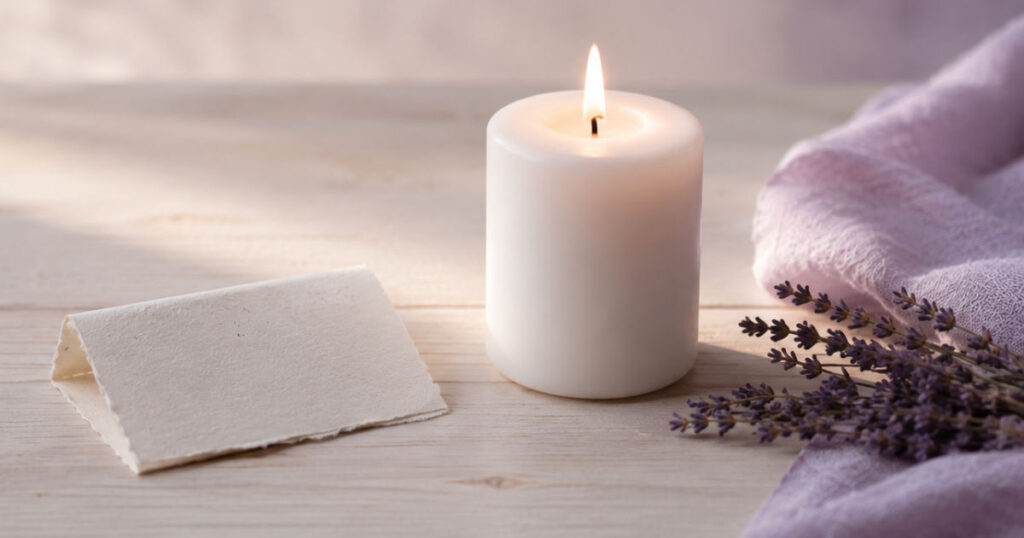
Setting Intentions with “Just for Today”: The Reiki Precepts Built for Hard Times
If you’ve come across Reiki, you may know the precepts — the guidelines Usui gave his students for a way of living. Every one of them begins with the same three words: Just for today.
Just for today, do not worry. Just for today, do not anger. Be humble, be kind, be honest. (If “do not” feels heavy, you can swap it for “release” — just for today, I release worry. Use whatever lands.)
What I love about that framing, especially in hard times, is the just for today part. It isn’t lowering the bar — it’s right-sizing it. When something drastic hits, thinking beyond the day is often too much. Too far, too painful, too uncertain. A single day is a length of time the nervous system can actually hold. Anything longer and it slips through your fingers.
And the sentence doesn’t have to stay fixed. You can complete it with whatever you most need in the moment. Maybe today the only thing you feel capable of is brushing your teeth — just for today, I’m okay with that. Just for today, I’ll drink a little more water. Just for today, I’m okay with not being okay. If one of the traditional precepts fits, wonderful — use it. If not, write your own. Whatever you need most, turned into one small sentence.
Sometimes the whole intention is simply: Just for today, breathe. That’s enough. That counts.
Small Intentions and the Body
A simple intention is a starting point — and on some days, naming it is all you’ll manage. But I find it helps enormously to anchor that intention with a small physical act. You can make the act as tiny as you like, and entirely your own.
There’s a real reason for this: the body is always listening. Pair a short phrase with a physical anchor, and you give the intention somewhere to land — a tether back to a sense of agency when everything else feels out of your hands.
On my Reiki Master course, I teach the sacred sounds of the Kotodama — a simple way of accessing the main Reiki frequencies. On a tough day, I might just hold my favourite piece of quartz and chant one of those sounds for a few seconds. Holding a stone is a huge comfort to me. Other times I’ll shuffle a tarot or oracle deck and draw a single card — not to divine the future, just to hold something in my hands and ask for a little support in the moment. Or I’ll state an intention and let myself take one deep breath, or a long sigh out. At night, a favourite is simply resting my hands wherever I feel drawn to on my own body, lying in bed, and letting healing light flow to where it’s needed.
None of this needs to be elaborate. Take the small action that’s easy and to hand right now. Hold an old teddy bear. Take your shoes and socks off and feel the floor under your feet. If there’s a tiny act that lines up neatly with your intention, even better — but it really doesn’t have to. “Just this next hour” rather than “this whole season” is the scale we’re working at.
When You Can’t Feel Your Compass at All
And then there are the times when even a micro-intention is out of reach — numbness, shutdown, the flatness of grief or depression, when nothing generates, and nothing lands. What then?
First: this isn’t failure. It’s a phase, not a permanent state, and it asks for something different. When you can’t generate steadiness, you can sometimes borrow it for a while — from a trusted person, a community, a practitioner. You can receive rather than produce: a distance healing, a Reiju, simply being held by someone who isn’t asking anything of you.
(And if a season ever tips into feeling genuinely unbearable, please treat reaching out to your GP, a therapist, or Samaritans (free, any time, on 116 123) as part of the same gentle instinct — leaning on the right support is strength, not weakness.)
I’d gently offer this, too. The more we crumble in these times, the more it tends to mean we loved. We grieve hardest for those we love the most. So the falling apart isn’t evidence that you’re weak — it’s evidence of how much you gave and how deeply you’re capable of caring. And every time you let yourself lean on someone, you quietly give them permission to lean on you, or on someone else, when their turn comes. Because it will. It does for all of us.
A Simple Practice for Choppy Water
If you’re in it right now, here’s something you can actually do — short and doable even on a bad day.
Pick one easy, instinctive thing that gives you a moment of pause or a moment of support. Choose something that needs no tools, or only something you can keep close to hand. Whenever I’m working with a client going through this, we figure out together what their tiny action is, because everyone’s is different.
A favourite of mine is a scent anchor. In a calm moment, settle into a restful state, and at the peak of that calm, breathe in a smell that naturally belongs to it. Later, that same scent can call the state back, because smell bypasses the thinking brain and goes straight to the emotional centres — which makes it a powerful, fast anchor. (One important safety note: never smell essential oils straight from the bottle, and don’t use them without proper knowledge. They should be appropriately diluted, and avoided for anyone pregnant, breastfeeding, or on prescribed medication unless you’re qualified to advise. A favourite candle, herb or piece of fruit is a perfectly good, safer alternative.)
If scent isn’t for you, touch works well — slowly stroking down your arms, squeezing the tip of a finger, a hand resting on your chest. The point isn’t the technique. It’s giving your body one small, kind signal that you’re still here, and still on your own side.
The Compass Still Works
Even when you can’t see far ahead — even when the only intention you can hold is just for today, or just this next hour — the compass is still working. It hasn’t broken. It’s simply operating at a much smaller scale, which is exactly the scale these seasons call for. A small intention, in the middle of feeling like you’re going under, is arguably more of a lifeline than the grand kind ever is. A small light in the dark.
So here’s what I’d most want you to take away. If you’re reading this in calmer waters, prepare your SOS kit now while it’s easy — so it’s ready when you need it. And if you’re struggling right now, I hope this gives you one small, doable way forward.
What’s the one just for today intention you could set for yourself before the end of today?
Just for today, take care of yourself.
If these monthly reflections are useful to you, the kindest thing you can do is let me keep them coming. Subscribe to the blog and newsletter, and I’ll send the next one straight to you — no pressure, no noise, just a gentle bit of support each month. Subscribe here →
And for when you’re ready — not now, not in the thick of it, but when there’s a little more room — building this kind of steadiness is exactly what self-study is for: gentle, structured, worked through entirely in your own time. My Discover Healing Talismans self-study course is a lovely place to begin.
FAQ
How do you set intentions when life is falling apart?
Shrink them. When everything feels out of control, drop “what do I want?” — which only highlights what’s missing — and ask instead, “what do I already have that I can lean on?” and “what do I need right now?” The answers make for small, doable intentions: a glass of water, ten minutes of rest, one honest conversation. Aim for a drip-feed of tiny supportive intentions rather than any big leap.
What does “just for today” mean in Reiki?
It’s the opening phrase of the Reiki precepts — Just for today, do not worry; do not anger; be humble, be kind, be honest. The “just for today” framing deliberately scopes the intention to a single day, because in hard times anything longer is unrealistic. It isn’t lowering the bar; it’s right-sizing it to a length of time you can actually hold. You can also complete the sentence with whatever you most need: just for today, I’m okay with not being okay.
What is a “way-of-being” intention?
It’s an intention about how you meet what’s happening, rather than about controlling the outcome. In a crisis you often can’t direct your attention toward a result — but you can direct it toward meeting the day with steadiness, honesty, or self-compassion. That shift, from outcome to way of being, is what makes intention usable when so much is outside your control.
How can I calm myself in the moment on a really hard day?
Pair one small intention with a physical anchor. Hold a stone, feel your bare feet on the floor, rest a hand on your chest and take one slow breath out. Scent is especially powerful because it bypasses the thinking brain and reaches the emotional centres directly — though essential oils should always be properly diluted and used with care. The technique matters less than the message it sends your body: you’re still here, and still on your own side.
What is a self-care SOS kit?
It’s a small, prepared collection of things that genuinely steady you, put together before a hard time arrives. It might be physical — a favourite candle, a crystal, an oracle deck, a comforting book, a letter to yourself — or it might be a practice, like a pre-set Reiki self-healing you can trigger with a simple cue. Knowing your own signature strengths helps you build one that actually fits you. The point is to prepare for difficulty in calm times, so support is already waiting when you need it.



0 Comments