


Table of Contents
Table of Contents
The Autumn Equinox (Mabon)
When did the turning of the year become something we notice only in passing — a chill on the morning walk, the heating clicking back on, the dark arriving before supper?
The autumn equinox is the year’s pause for balance. On 23 September 2026, day and night stand equal, and from this point the light gives way to the dark half of the year. Older traditions call this moment Mabon: a harvest festival of thanksgiving, reflection and gentle release. You don’t need to follow a pagan path, or own a single black candle, to mark it. You only need a willingness to stop long enough to notice what the year has grown in you. Below are seven ways to celebrate the autumn equinox — some old, some wholly practical, all designed to bring you back into balance as the season turns.
What the Autumn Equinox actually asks of us
Balance is the whole point of this day, and it’s easy to say and harder to live. The equinox holds light and dark in equal measure and doesn’t ask you to choose between them. That’s a useful thing to sit with, because most of us are far better at one half than the other — brilliant at doing and hopeless at resting, or all reflection and no action. The rituals that follow each hold a bit of both: gratitude and release, gathering in and letting go. Take the ones that speak to you and leave the rest. There’s no correct way to do this.

1. Gather your harvest (a gratitude practice)
Before the shops start mentioning Christmas, take an evening to gather your harvest — not the vegetable kind, though a walk round a farm shop or an allotment is no bad way in. This is about naming what the year has actually yielded. What have you grown since spring? What have you learned, mended, built, survived?
Sit down with a warm drink and write it out. Be specific and be generous with yourself: the difficult conversation you finally had, the habit that held, the small competence you barely noticed arriving. We’re quick to tally what’s still undone and slow to count what’s already in the barn. The equinox is a moment to redress that balance. If it helps, share your list aloud with someone you trust, or read it to the room and to yourself. Gratitude spoken has a different weight than gratitude thought.
2. Walk the Threshold
An autumn equinox walk isn’t a march for steps or fitness — it’s a walk taken on purpose, to feel the season change under your feet. Go slowly. Notice the light coming in at a lower angle, the first proper leaf-fall, the particular smell of damp earth that belongs only to this time of year.
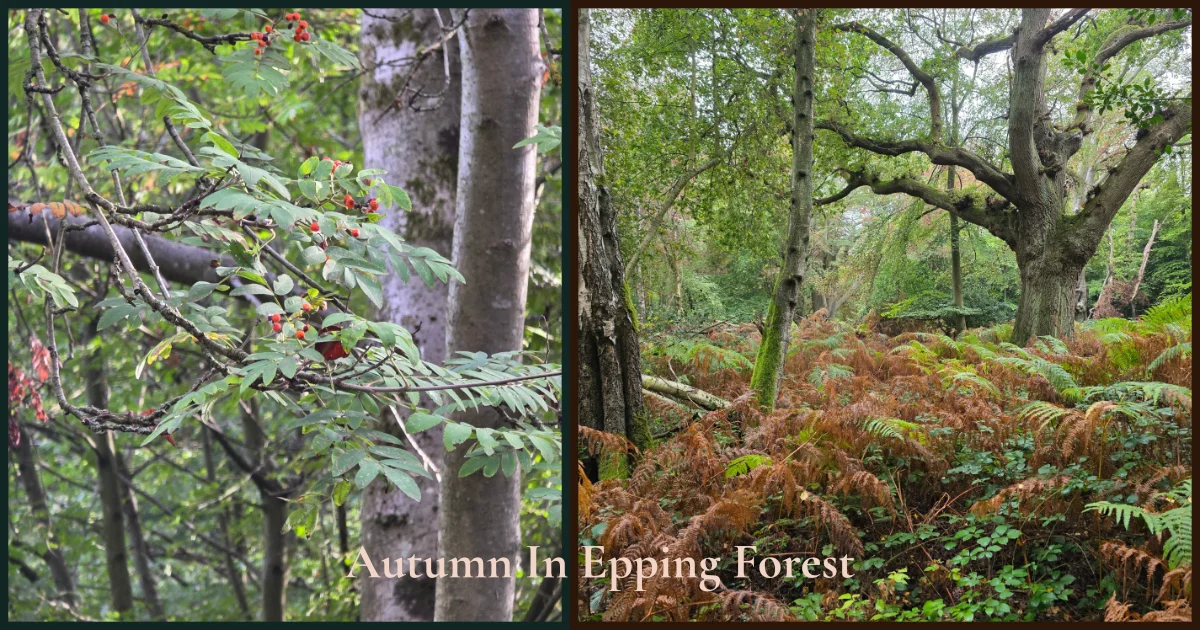
As you walk, treat it as a threshold. You’re crossing from the outward, growing half of the year into the inward, resting half. Let the walk mark that crossing. Gather a few natural offerings as you go if it feels right — a conker, an acorn, a striking leaf, a seed head — not to hoard, but to bring one small piece of the season home for your altar. I used to consider Autumn my least favourite time of year; that was when I was trapped in a city. Now that I live on the doorstep of Epping Forest, Autumn has become one of my favourite seasons, and the most colourful.
3. Build an Autumn Equinox Altar
An altar is a small, deliberate space that reminds you what you’re paying attention to. It needn’t be elaborate or on show — a windowsill, a shelf, the corner of a chest of drawers.
Build it from the season: those found leaves and seeds, a candle or two, something that stands for the harvest (a few apples, a sheaf of wheat, seasonal flowers), and a crystal chosen for the season. Autumn stones tend toward the grounding and the golden — citrine and carnelian for warmth and courage as the light fades, tiger’s eye and smoky quartz for steadiness, labradorite for the threshold itself, holding the space between light and dark. Arrange it however feels balanced to your eye, and set a simple intention as you place the last piece: what do you want this darker half of the year to be for?
4. Light a candle and sit with the turning
There’s a reason nearly every autumn tradition involves flame. As the natural light shortens, we bring our own. Choose a candle — amber, deep red, a warm gold — and light it with a little ceremony rather than a passing distraction.
Then sit. Five minutes is plenty. Watch the flame, feel your breath slow, and let the day’s noise settle. If you have a meditation or Reiki practice, this is a lovely moment to use it; if you don’t, simple attention to the candle and your breathing is a complete practice in itself. If you’ve used a scented candle or dressed it with oils and herbs, you can enjoy the aroma, or just listen to the small sounds in the room or the crackle of flame. This is the equinox in miniature: a small, held balance between the light you’ve made and the dark gathering outside.
5. Cook the season
Few rituals are as honest as feeding people. Mabon is, at heart, a harvest supper. Cook something that belongs to now — a squash roasted until it collapses, a blackberry and apple crumble, bread, root vegetables, anything that tastes of the ground and the falling year.
The ritual isn’t the recipe; it’s the attention: choosing seasonal ingredients on purpose, cooking without rushing, and sharing the result. Lay the table properly. Light your candle. Invite someone, or make it a deliberate meal for one. Before you eat, name one thing from your harvest list. Food eaten with a little reverence and gratitude nourishes more than the plate.
6. Balance the books of your year
This is the reflective heart of the equinox, and the ritual I’d protect above the others. The year is two-thirds done. Rather than wait for a January that arrives exhausted and over-promised, take stock now, while the harvest is fresh.
Try three prompts, in order:
- What has this year grown that I’m glad of?
- What am I still carrying that I’d rather not take into winter?
- If I lived the rest of this year as the version of me who trusts it will work out — what would I do differently from tomorrow?
You’ll notice the third one shifts the ground. Much of what weighs on us isn’t fact; it’s a story we’ve repeated until it feels like fact — I’m not someone who finishes things; I always end up here; it’s too late for that now. Journaling like this doesn’t force cheerfulness; it creates a small gap between you and the story, and in that gap there’s a choice. You don’t have to become a new person by morning. You only have to notice which version of you is holding the pen.
7. Let the leaves fall
The equinox tips us toward the dark, and the trees model exactly what to do about it: they let go. Nothing dramatic, no wrenching — they simply stop holding on to what the season is finished with.
Make that literal. Write on a few dry leaves, or slips of paper, the things you’re ready to set down — a resentment, an over-commitment, a belief that’s outstayed its welcome. Then release them: burn them safely in a firepit, bury them, or let them go on the wind. Balance this with intention, because the equinox is never only about release. For each thing you set down, name one thing you want to grow through the winter. Let the fire, or the earth, hold both.
Autumn equinox: a threshold worth honouring
You don’t have to do all seven. The equinox isn’t a checklist — it’s an invitation to pause on the threshold of the darker year and cross it on purpose rather than being dragged across it by the clocks changing. Gather what the year has grown. Set down what you no longer need. Come back into balance.
If this way of working — reflective, grounded, gently practical — is one you’d like to go deeper with, there are two doors. You can bring it into your own practice by learning Reiki, or, if you’d rather not walk the threshold alone this season, you can sit with someone alongside you. Either way, the work is the same: coming home to yourself, one turn of the year at a time.
FAQs
What is the autumn equinox (Mabon)?
The autumn equinox is the day when the sun crosses the celestial equator and day and night are close to equal length. In the Northern Hemisphere, it falls around 22–23 September and marks the start of autumn. In pagan and Wiccan traditions, it’s known as Mabon, the second of three harvest festivals — a time for thanksgiving, balance and preparing for the darker half of the year.
When is the autumn equinox in 2026?
In 2026, the autumn equinox falls on 23 September in the Northern Hemisphere. The exact moment shifts slightly each year between 22 and 23 September.
How do you celebrate the autumn equinox at home?
You can celebrate simply: write a gratitude or harvest list, take a mindful autumn walk, build a small seasonal altar, light a candle and sit with the turning of the season, cook a meal from seasonal produce, journal on the year so far, and hold a gentle release ritual for anything you’re ready to set down. Choose one or two rather than trying to do everything.
What crystals are good for the autumn equinox?
Grounding, warming and threshold stones suit the season best: citrine and carnelian for warmth and courage, tiger’s eye and smoky quartz for steadiness and protection, and labradorite for transition and the space between light and dark. Many people like to wear or carry a seasonal stone through autumn as a small daily reminder of balance. (You’ll find these in the crystal jewellery collection.)
What foods are traditional for Mabon?
Mabon is a harvest festival, so the traditional foods are seasonal and grounding: apples, blackberries, squash and pumpkin, root vegetables, nuts, bread and grains, and warming spices. Anything that tastes of the harvest and can be shared at a table fits the day.
What goes on an autumn equinox altar?
A seasonal altar usually holds items that represent the harvest and the turning year: found leaves, acorns and seed heads, apples or wheat, candles in autumn colours, a seasonal crystal, and something that represents an intention for the coming darker months. Arrange it to feel balanced, and refresh it as the season deepens.


0 Comments